Whoa! I stared at my wallet balance and felt a chill. The numbers didn’t match what I remembered, and my first instinct said: check the chain. Seriously? Yes — because on Solana, a single failed transaction or a delayed confirmation can look like money gone missing if you don’t use the right tools.
Initially I thought explorers were just nerd toys. But then I realized they’re the plumbing of trust. They’re how you verify that a transfer happened, that a program executed, or that a token minted without trusting a third party. On one hand explorers can be dense and overwhelming; on the other, they unlock transparency that saves time and headaches. I’m biased, but once you learn a few patterns, they become indispensable.
Here’s the thing. Not all explorers are created equal. Some focus on speed. Some lean into analytics. Some are easy on the eyes. When I’m troubleshooting a stuck SOL transfer I want raw logs, slot details, and instruction-level breakdowns — fast. When I’m evaluating a token project I want historical minting info, owner concentration, and verified program IDs. Different tasks, different lenses.
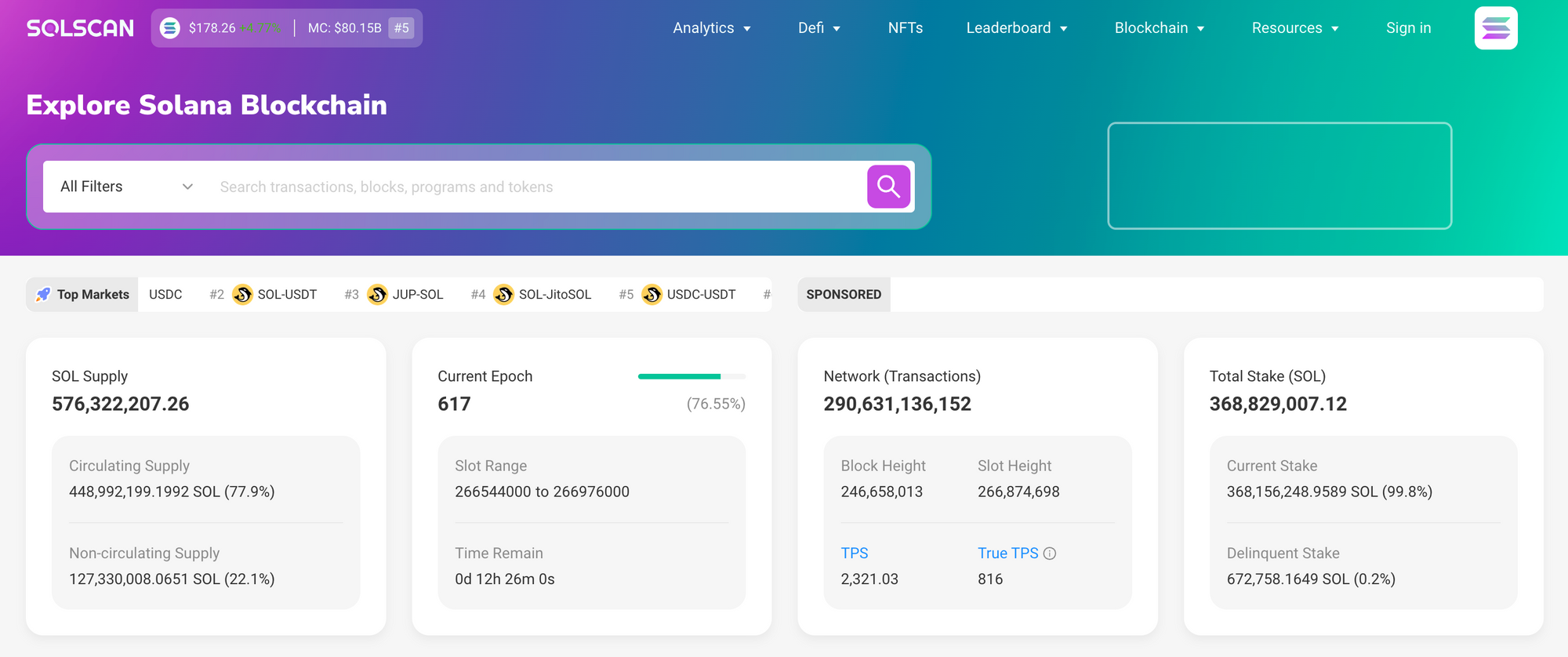
Okay, so check this out—I’ve used a handful of Solana explorers in different settings (testnet drama, mainnet mishaps, and routine audits). My instinct said solscan explorer often hits the sweet spot for everyday users and power users alike. It balances readable transaction pages with deep technical details, so you can pivot between simple confirmations and deep dives without feeling lost.
How to read a SOL transaction page
Wow! Start simple: find the signature. That’s the primary ID for a transaction. Next look at status: confirmed, finalized, or failed. If it’s failed, expand the logs and scan for “error” or “insufficient funds” — somethin’ basic like rent exemption can trip people up.
Transaction pages typically show instructions next. Each instruction maps to a program. For transfers you’ll see system program entries; for token moves you see SPL Token program calls. Actually, wait—let me rephrase that: transactions bundle instructions and account changes, and the explorer decodes those into human-readable steps, though sometimes decoding fails for newer programs.
On complicated interactions you want to inspect pre- and post-balances. Those numbers tell you who paid the fee and how accounts changed. Look at the block time and slot too. Slots are Solana’s heartbeat, and they help you confirm ordering when things look off across exchanges or wallets. (oh, and by the way… slot reporting differs slightly between explorers.)
One more practical tip: if a transaction is stuck in “processed” for a long time, try a resend with the same nonce or wait for finality depending on your app. On a busy day you might see retries, partial failures, or timeouts. These are the moments when a good explorer saves you a call to support.
Why logs and instruction decoding matter
Hmm… logs are where the narrative lives. They contain program outputs, error traces, and sometimes custom messages from smart contracts. If a swap failed, the logs usually say why. If a mint succeeded, the logs often show the token address and decimals. This is very very important when you’re auditing an airdrop or verifying a contract’s behavior.
On one hand, the raw binary is inscrutable. On the other hand, decoded instructions are a translator. Initially I thought the explorer’s decoding was perfect, but then I ran into a custom program that used nonstandard instruction layouts. That’s the limit: explorers decode many common programs, but novel or obfuscated programs may remain opaque.
Pro tip: cross-reference logs with on-chain program IDs. If a program ID isn’t verified or well-known, be wary. Developer teams often publish their program IDs; if they don’t, pause and ask questions. I’m not 100% sure about every project out there, and that uncertainty has stopped me from interacting with a few sketchy contracts.
Analytics you actually use
Really? Yes — token holders and transfer charts are useful. They show concentration risks and whale movements. When a token’s supply sits with a few wallets, red flags go up. Seeing a sudden large transfer out of a founding wallet makes you want to dig.
Explorer dashboards often provide historical TX counts, fee estimations, and top programs. For builders, those metrics show usage trends. For traders, they show on-chain activity around launches. On the other hand, raw volume alone can be misleading; pair it with wallet dispersion and program vetting for a fuller picture.
When debugging a failing integration I usually check RPC latency and recent block times, too. Network congestion spikes can explain slow confirmations. And yes — if you’re in Silicon Valley and testing during East Coast hours, your latency story might differ. Little context like that matters more than folks assume.
Workflow: from curiosity to confirmation
Here’s the short playbook I use, step by step. First: copy the transaction signature or wallet address. Second: paste it into an explorer search. Third: read status, block time, and fee payer. Fourth: inspect logs and instruction sequence. Fifth: if needed, cross-check token mint and owner counts. Quick, simple, effective.
On paper it’s straightforward. In practice, though, weird stuff happens — RPC nodes misbehave, indexers lag, and sometimes metadata points to third-party servers that are down. That’s when switching to an alternate explorer or a different RPC provider resolves the ambiguity. Seriously, having a backup path is underrated.
For everyday users, most checks stop at confirmation and balance changes. For developers and auditors, you’d dig deeper: rent exemptions, PDA derivations, and inner instruction traces. Those inner traces can reveal hidden ops that affect security and cost. I’m biased toward digging deeper when money’s on the line.
Best practices and common pitfalls
Wow! Always verify program IDs. Never assume contract names. Use explorers to validate token mints and contract ownership. Watch out for token clones and typosquatting in token names — they’re common at launches.
Also, keep in mind that explorers reflect data from indexers and RPC nodes, so temporary mismatches can happen. If you see inconsistent results, check multiple sources and wait for finality if it’s non-urgent. For urgent cases, escalate through project’s verified channels, and snapshot evidence — screenshots and signatures — before taking action.
Finally, remember privacy: anyone can view public addresses and transactions. If you’re moving funds, consider best practices to reduce linkability, and don’t reuse addresses for sensitive operations if you can avoid it. I’m not a privacy maximalist, but this part bugs me.
FAQ
How do I find a transaction signature?
Check your wallet’s transaction history or the RPC response from your app. The signature is a long base58 string that uniquely identifies the transaction on chain.
Which explorer should I use for detailed logs?
If you want a balance of readability and depth, try solscan explorer. It shows decoded instructions, logs, and token analytics without getting in the way.
Leave a Reply